BEIJING: The investigation into China’s highest-ranking general Zhang Youxia marks one of the most extraordinary turns in the country’s long-running military shake-up, given his background, rank and proximity to President Xi Jinping, say analysts.
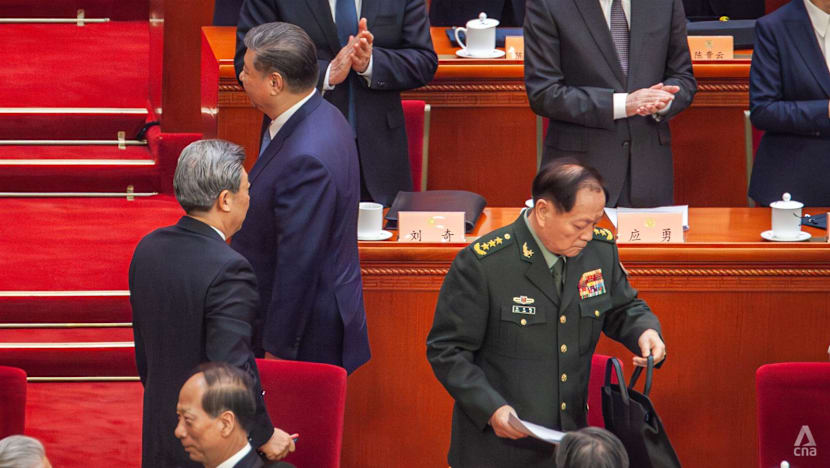
A war veteran, the son of a founding People’s Liberation Army (PLA) general and one of Xi’s longest-serving allies in uniform, Zhang had widely been seen as politically secure - even untouchable - within the armed forces. That perception has now been shattered.
China said on Saturday (Jan 24) that Zhang, a serving vice-chair of the powerful Central Military Commission (CMC), has been placed under investigation for “serious violations of discipline and law”, a common euphemism for corruption.
Liu Zhenli, a fellow CMC member and chief of its Joint Staff Department, was also placed under investigation, according to the announcement carried by state media.
Analysts say Zhang’s plight may reflect a confluence of factors, such as a possible erosion of trust between him and Xi as well as the Chinese supremo’s broader effort to consolidate control over the military and reshape the CMC ahead of the 21st Party Congress in 2027.
The episode underscores how no one is immune in Xi’s remaking of the PLA, not even those once regarded as trusted insiders, they further point out.
“The fact that Zhang Youxia, the son of a founding general, has now been placed under investigation shows that red second-generation or military second-generation networks are not a priority for Xi,” said Lin Ying-yu, an associate professor at the Graduate Institute of International Affairs and Strategic Studies at Tamkang University in Taiwan.
“For Xi now, there are no absolute relationships, no absolute friends and no absolute subordinates,” he told CNA.
Turbulence at the top of the military could ripple through the chain of command, affecting readiness and operational tempo by slowing decision-making and encouraging risk aversion, at least in the short term, warned observers.